
FluidMIM range
Industrial centrifugal pumps
Six series of stainless steel centrifugal pumps for transferring clean or low-viscosity liquids: from the compact pump for auxiliary duties to the hygienic pump with EHEDG design and the self-priming pumps, with flow rates of up to 100 m³/h.
- 6 seriesFrom compact to EHEDG hygienic
- 100 m³/hMaximum flow rate (FLUID)
- 80 m headMaximum head, water column (FLUID 104)
- AISI 316 / 316LWetted parts
- 0.25–22 kWMotor power ratings
- 3.5–6 mSuction lift of the self-priming pumps
Prefer to speak to a technician? Call 972 58 20 40 or download the FLUIDMIM catalogue (PDF)
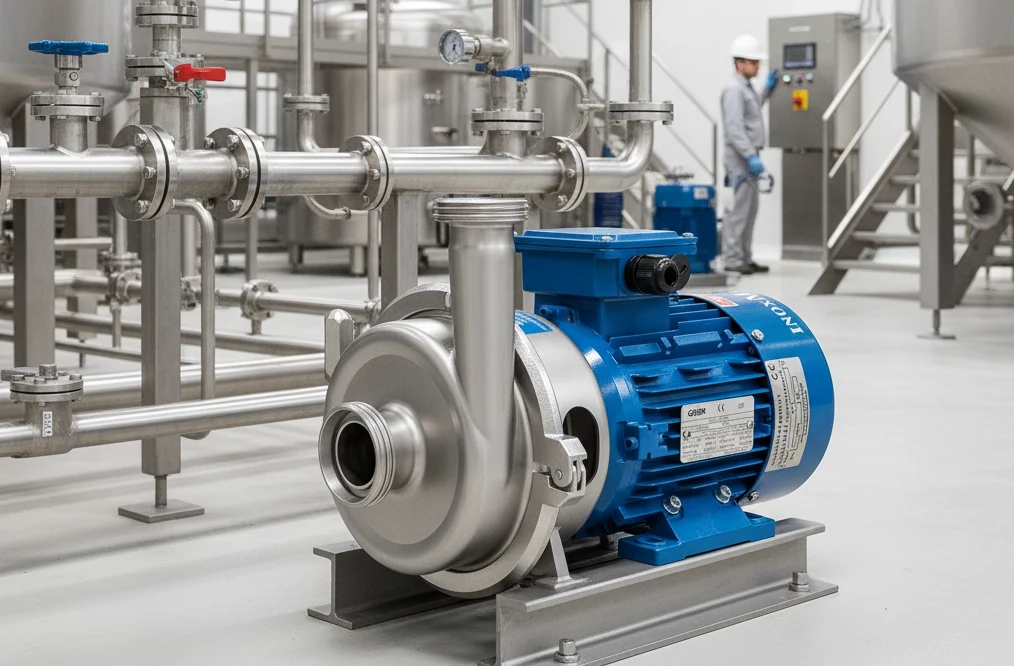
InoxMIM centrifugal pump models
Six series that cover everything from simple transfers to the most demanding hygienic processes. Each card leads to the model page, with its curves, technical data and options.
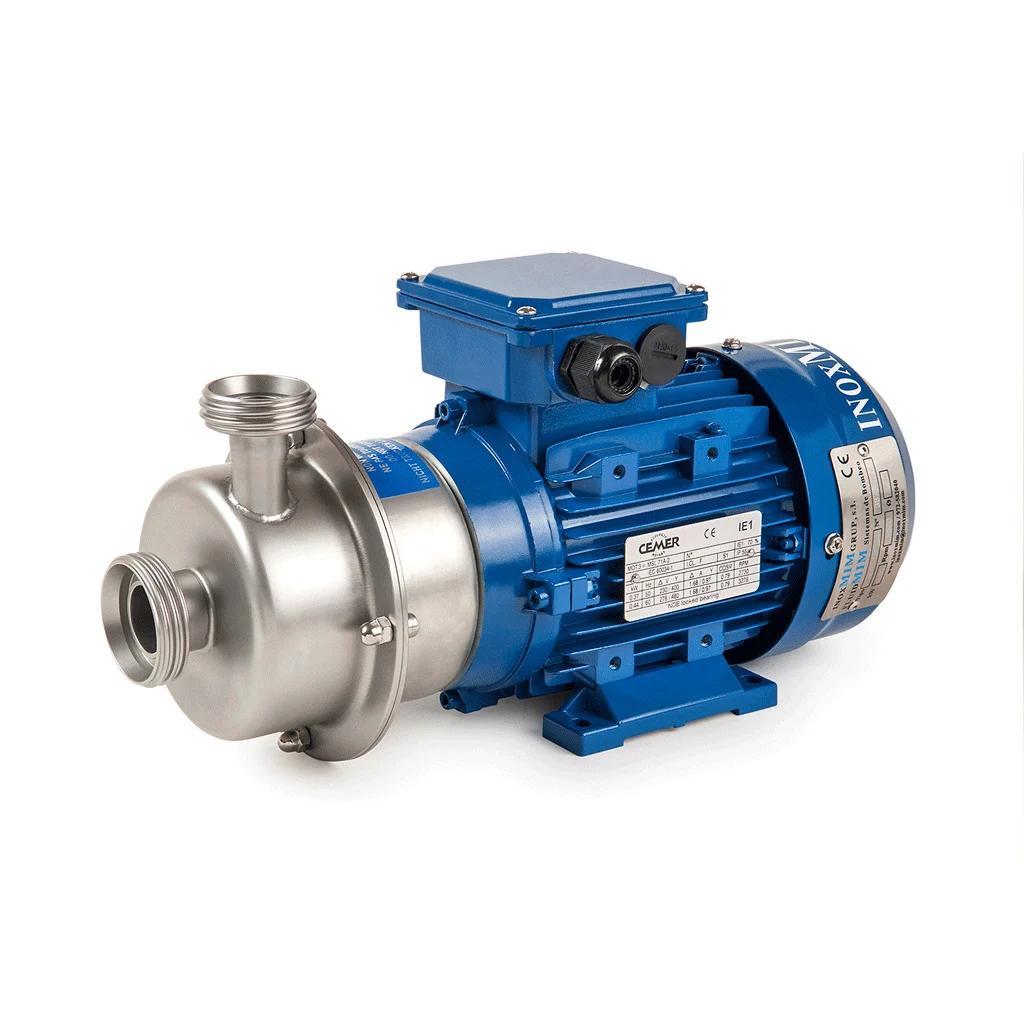
Compact
FL20C
For transfers and auxiliary duties with water, oils, glycols or low-viscosity wines. Easy to move on a trolley.
- 12 m³/hMax. flow rate
- 10 m headMax. head
- AISI 316Material
View the FL20C data sheet →
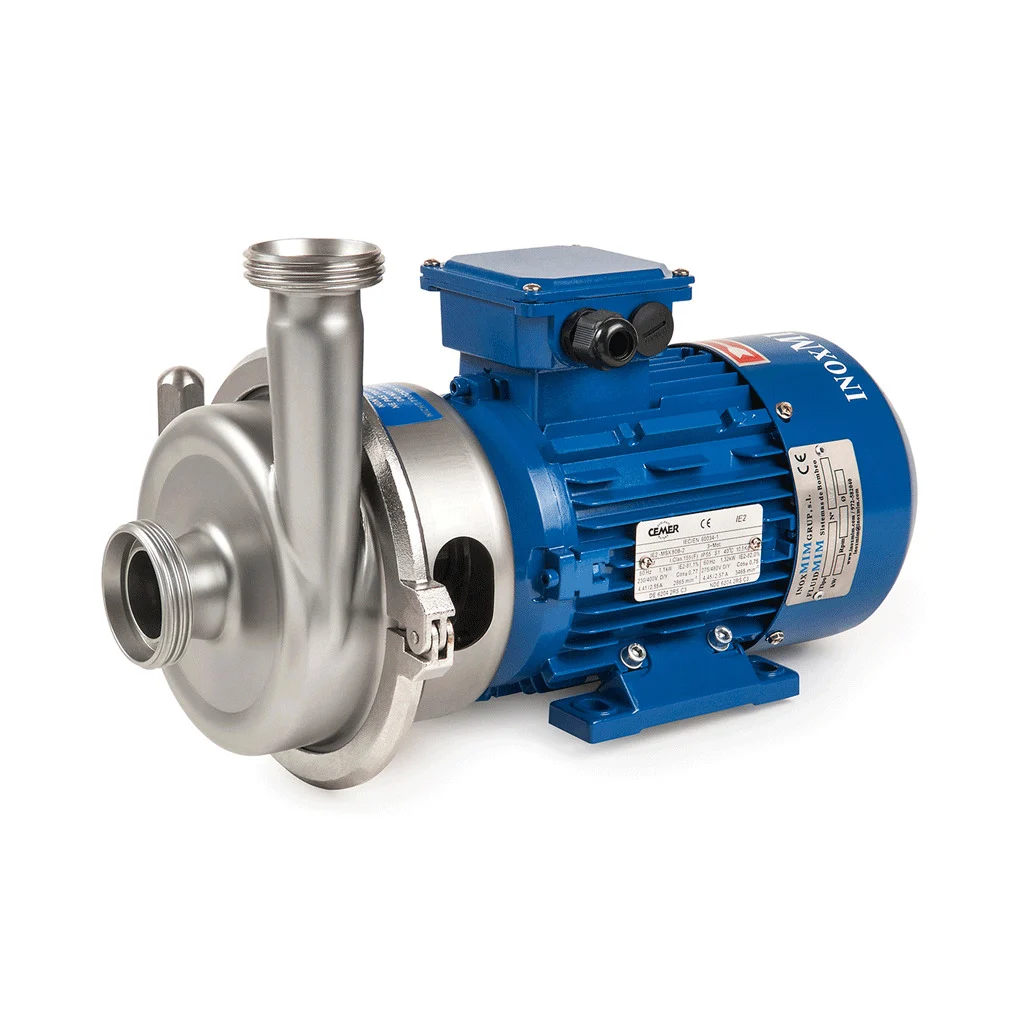
Industrial
FL30CI
Open impeller for wines, musts, oils, alcohols, solvents or brines, even with non-abrasive suspended solids.
- 90 m³/hMax. flow rate
- 67 m headMax. head
- 0.37–22 kWMotor
View the FL30CI data sheet →
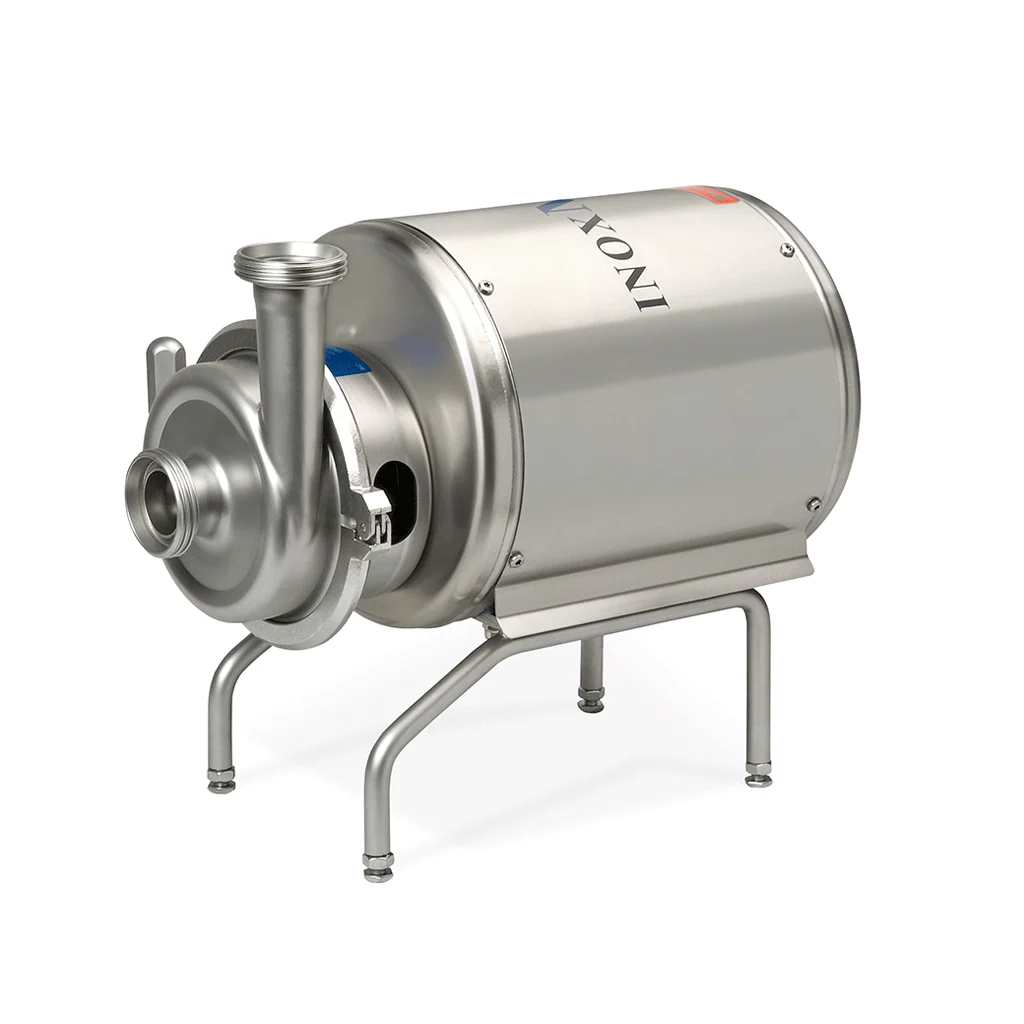
Sanitary
FL50CI
For milk, whey, juices, wine or cleaning solutions, with a food or pharmaceutical finish and suitable for CIP cleaning.
- 90 m³/hMax. flow rate
- 67 m headMax. head
- Ra < 0.4 µmSanitary finish
View the FL50CI data sheet →
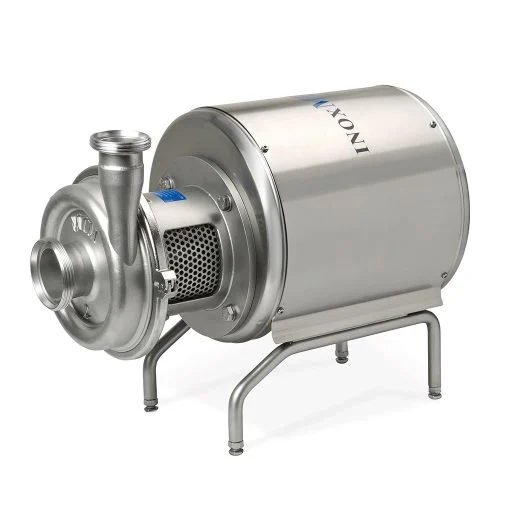
Hygienic EHEDG
FLUID
EHEDG hygienic design and CIP or SIP cleaning without dismantling, for purified water, syrups, milk, juices, lotions or alcohols.
- 100 m³/hMax. flow rate
- 80 m headMax. head
- AISI 316LMaterial
View the FLUID data sheet →
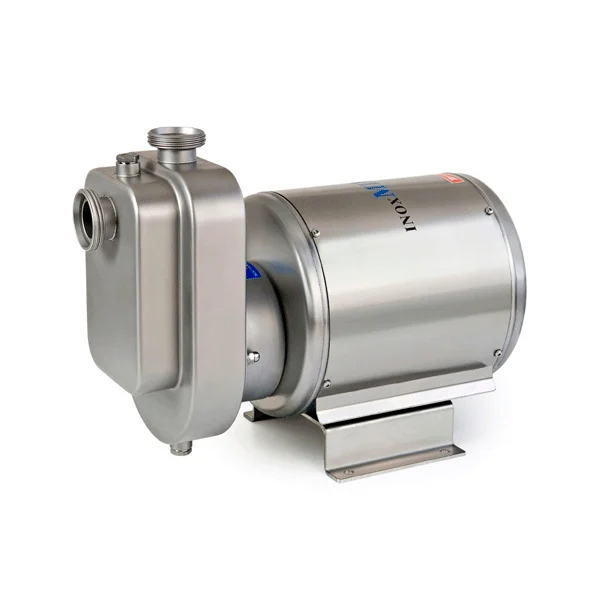
Sanitary self-priming
FL80CAI
Self-priming even when it sits above the liquid: it empties tanks, tankers or lines containing air, with food, chemical or winemaking products.
- 50 m³/hMax. flow rate
- 61 m headMax. head
- 3.5–6 mSuction lift
View the FL80CAI data sheet →
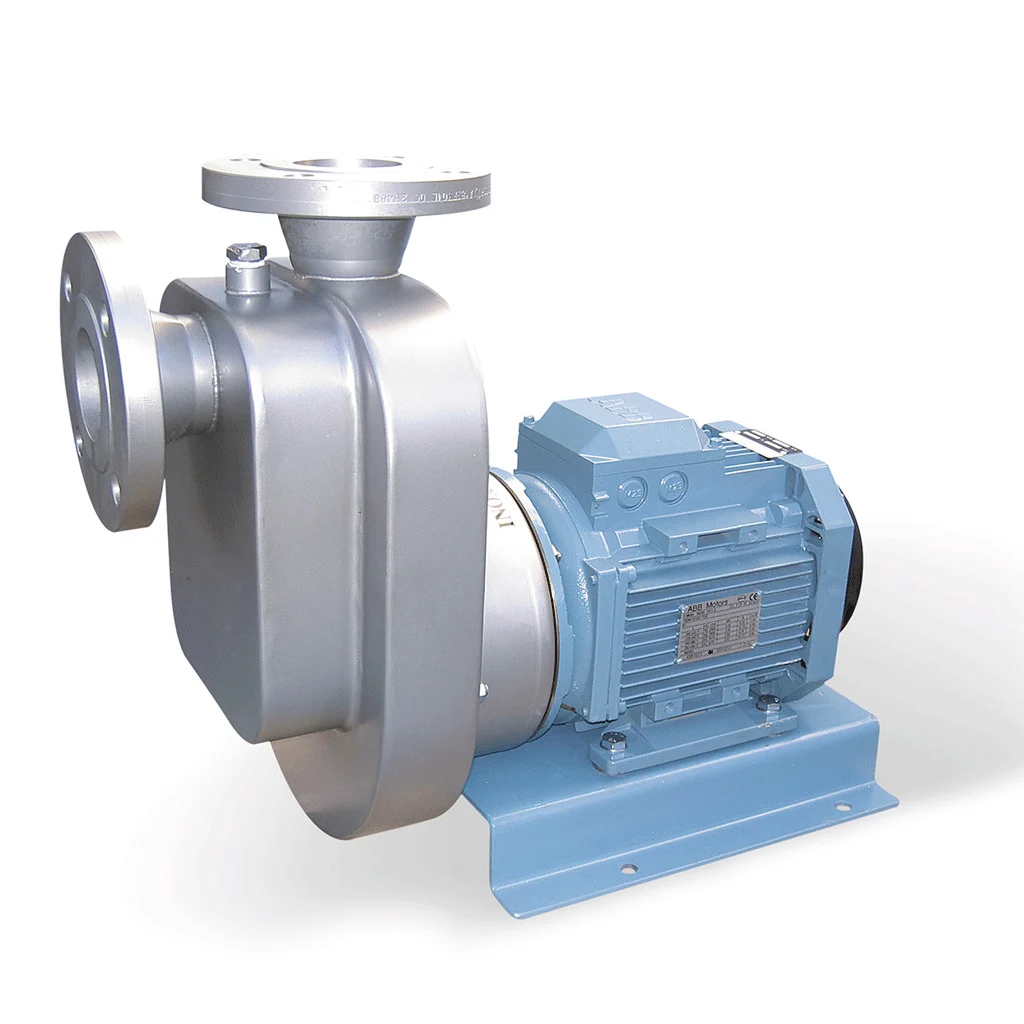
Centrifugal pump comparison
The basic data for each series, to see at a glance which one suits your process.
| Series | Type | Max. flow rate | Max. head | Material | Typical use |
|---|---|---|---|---|---|
| FL20C | Compact, semi-open impeller | 12 m³/h | 10 m head | AISI 316 | Transfers and auxiliary duties |
| FL30CI | Industrial, open impeller | 90 m³/h | 67 m head | AISI 316 | Chemical, winemaking and food with an industrial finish |
| FL50CI | Sanitary, open impeller | 90 m³/h | 67 m head | AISI 316 · Ra < 0.8 / 0.4 µm | Food, pharmaceuticals and cosmetics |
| FLUID | Hygienic, EHEDG design | 100 m³/h | 80 m head | AISI 316L | Hygienic processes with CIP and SIP |
| FL80CAI | Sanitary self-priming | 50 m³/h | 61 m head | AISI 316 | Emptying of tanks and tankers |
| FL90CAI | Industrial self-priming | 50 m³/h | 61 m head | AISI 316 | Industrial emptying and transfer |
Maximum values for each series according to the FLUIDMIM catalogue. The curves, power ratings and connections of each model are on its page.
Which centrifugal pump do you need?
Choose the situation closest to yours and we will take you to the right model.
How a centrifugal pump works
A centrifugal pump converts the mechanical energy of the motor into kinetic energy in the fluid through the rotation of an impeller. The liquid enters through the centre, the impeller accelerates it towards the periphery and the volute directs it to the outlet under pressure. The result is a continuous, pulsation-free flow with little maintenance.
It is the most efficient technology for clean or low-viscosity liquids. When the product is viscous, abrasive or delicate, a positive displacement pump is more suitable. If you want to learn about its parts and operation in depth, see our guide what is a centrifugal pump.
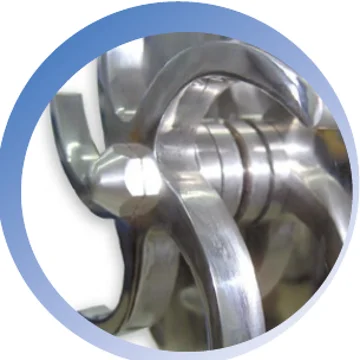
Continuous, stable flow
Constant flow, without pulsation or vibration, which protects the product, the valves and the filling lines.
Stainless steel (wetted)
AISI 316 in all series and AISI 316L in the FLUID, with gaskets chosen according to the product and temperature.
Simple maintenance
Few parts and direct access to the impeller and mechanical seal, to reduce downtime.
A level of hygiene for every process
Industrial, food or sanitary finish, or EHEDG hygienic design, depending on what your product requires.
Bespoke configuration
Motors of different power ratings and DIN 11851, Clamp or SMS connections depending on the series.
Sizing advice
We help you choose the series and motor using the flow rate, head and NPSH of your installation.
Applications of centrifugal pumps in industry
Where InoxMIM centrifugal pumps work within a process plant.
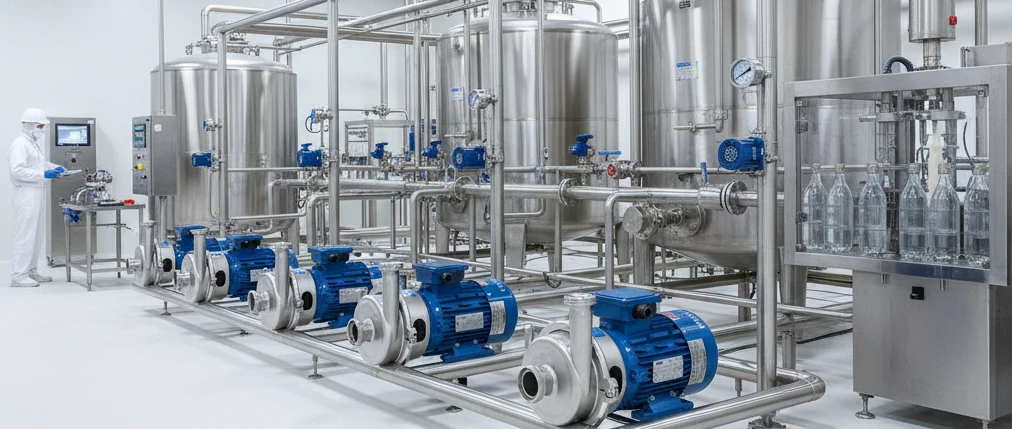
Liquid transfer
Transfer of low-viscosity food, cosmetic or chemical fluids between tanks and to packaging or pasteurisation lines, with a constant flow.
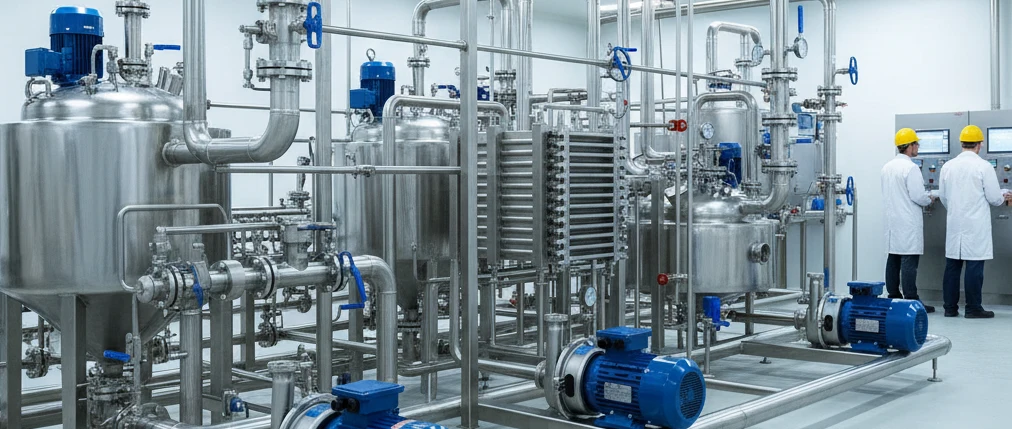
Feed and recirculation
They maintain the recirculation flow in mixers, homogenisers, reactors and heating or cooling circuits.
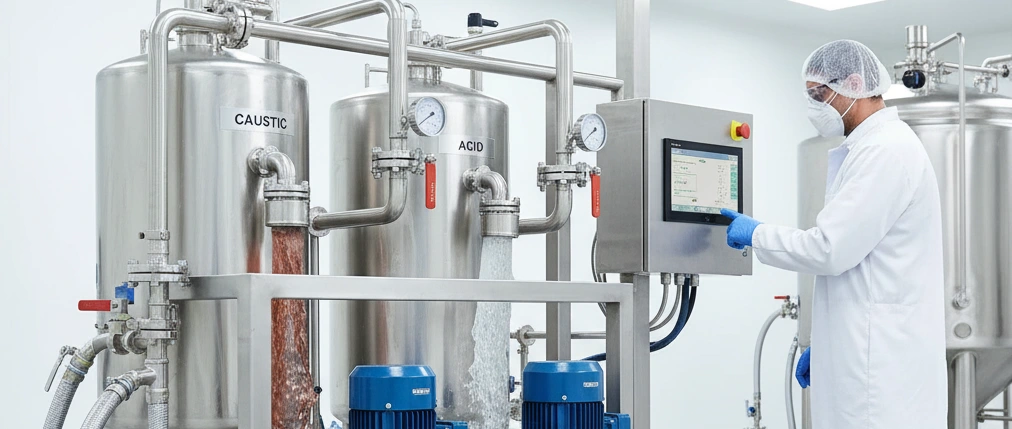
CIP cleaning
The sanitary versions drive cleaning solutions through pipes, valves and equipment without dismantling them.
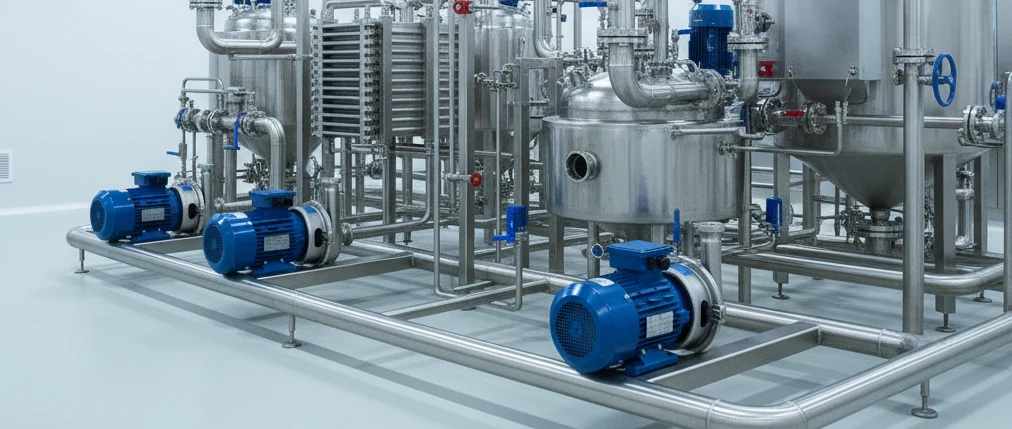
Heat exchangers and reactors
They feed or recirculate the product in heat exchangers, reactors and evaporators, where a stable flow improves heat transfer.
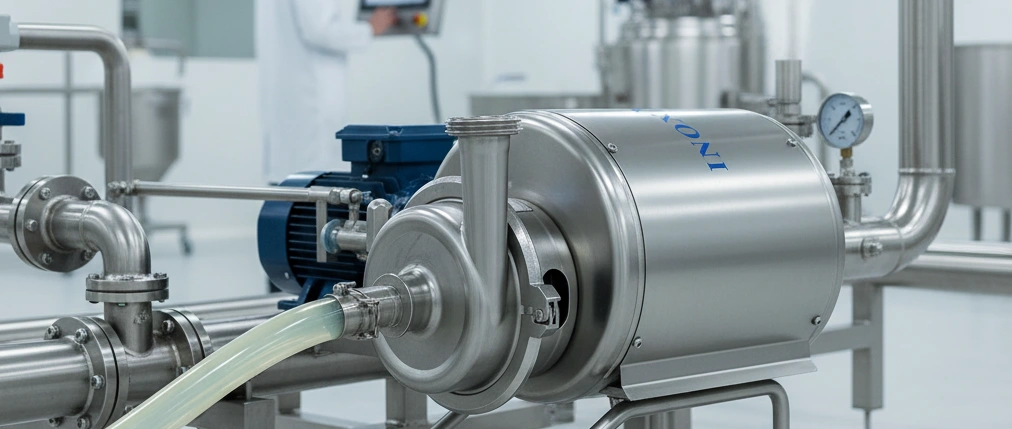
Filtration and filling
They feed tangential filters, filter presses, microfiltration equipment and filling lines, where constant pressure prevents overfilling.
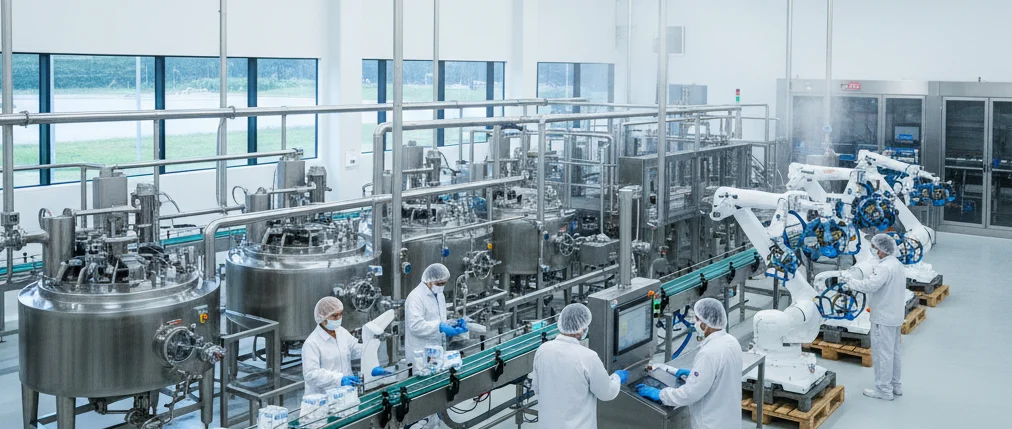
Multi-sector plants
In food they move milk, syrups, juices or sauces; in cosmetics, gels and fluid emulsions; in chemicals and pharmaceuticals, corrosive or high-purity fluids.
Frequently asked questions about industrial centrifugal pumps
What advantages does a centrifugal pump have over a positive displacement pump?
It moves more flow with lower consumption, gives a continuous flow without pulsation and needs little maintenance. It is the best option for clean or low-viscosity liquids. For viscous, abrasive or delicate products, a positive displacement pump is more suitable, such as progressive cavity pumps or lobe pumps.
How do you choose the right centrifugal pump?
You need to know the flow rate, head, viscosity and temperature of the product, its chemical compatibility and the suction conditions (available NPSH). With these data you choose the series and, on its curve, the model and motor. The comparison on this page is a good starting point.
What material are InoxMIM centrifugal pumps made of?
All wetted parts are made of AISI 316 stainless steel; in the FLUID, of AISI 316L. The gaskets and mechanical seal are chosen according to the product and the working temperature.
Which centrifugal pumps allow CIP or SIP cleaning?
What should I do if the pump has to sit above the liquid?
What maintenance do centrifugal pumps need?
Check the mechanical seal and bearings periodically and monitor vibration. InoxMIM series have few parts and easy access to the impeller and seal. You will find more detail in our centrifugal pump maintenance plan.
How do you avoid cavitation in a centrifugal pump?
By sizing the suction correctly: a short pipe of the right diameter, few head losses and an available NPSH greater than the one the pump requires. We explain it in what is the NPSH of a centrifugal pump.
Do you offer technical support for sizing a centrifugal pump?
Yes. InoxMIM's technical department advises you on hydraulic selection, calculation of the duty point and adapting the pump to the real conditions of your process.
Other InoxMIM industrial pumps
If your product is viscous, abrasive or contains solids, another pumping technology may suit it better.
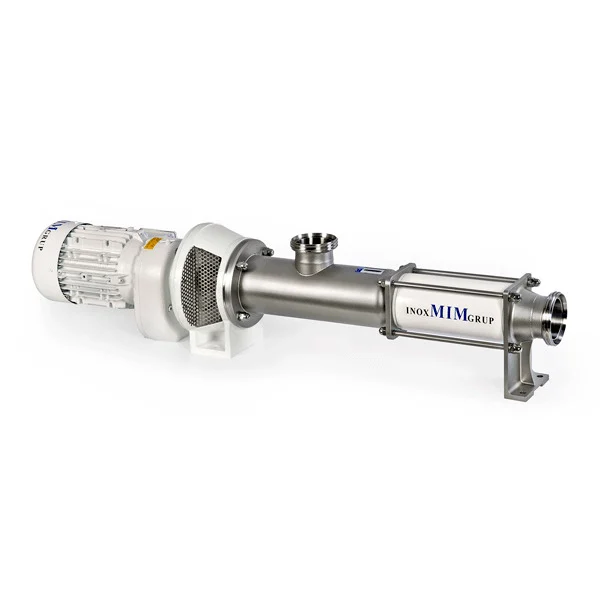 Progressive cavity pumpsViscous or delicate products
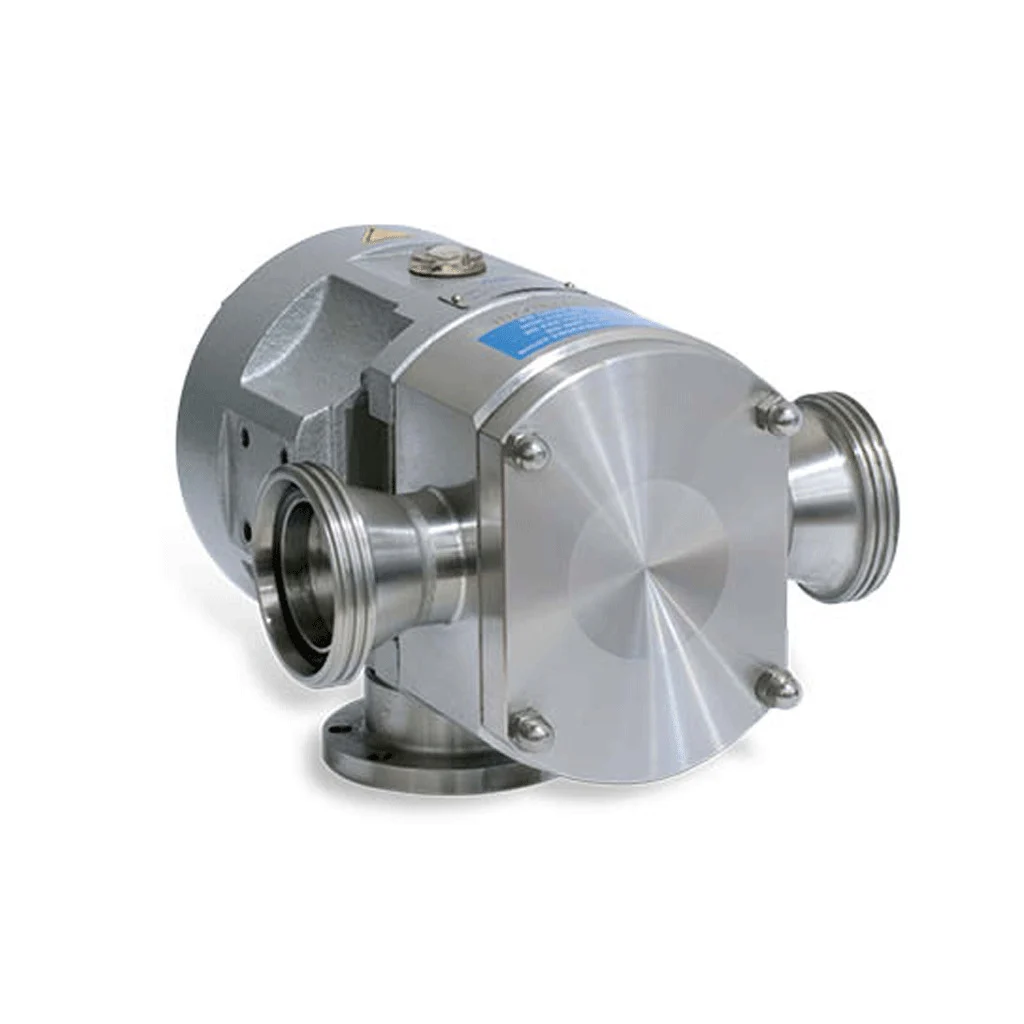 Lobe pumpsViscous liquids, gentle pumping
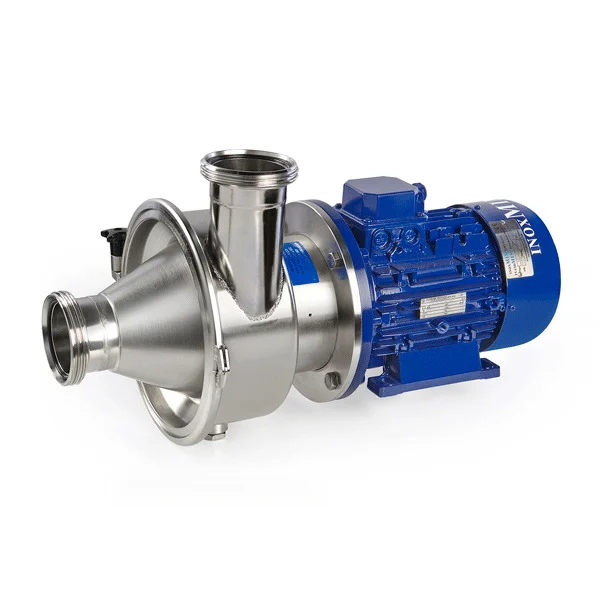 Helical impellerProducts with whole solids
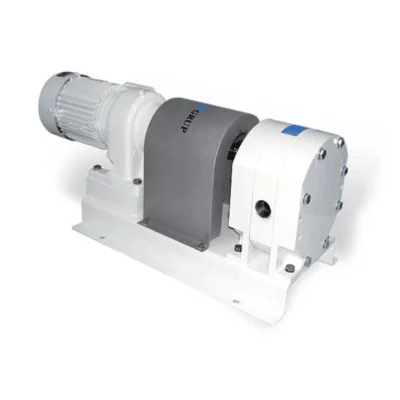 Gear pumpsOils, fats and molasses
 Peristaltic pumpsSludge and abrasive suspensions
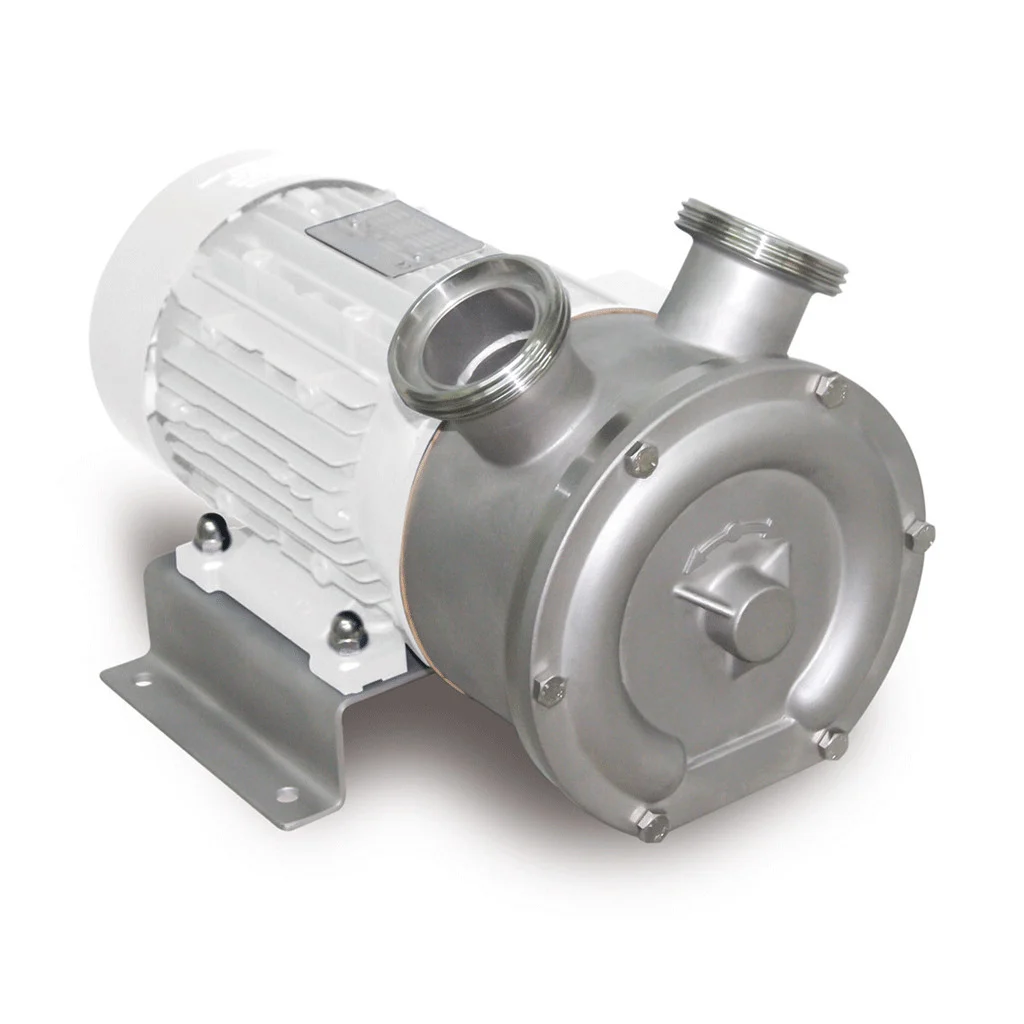 Liquid ringSelf-priming and reversible
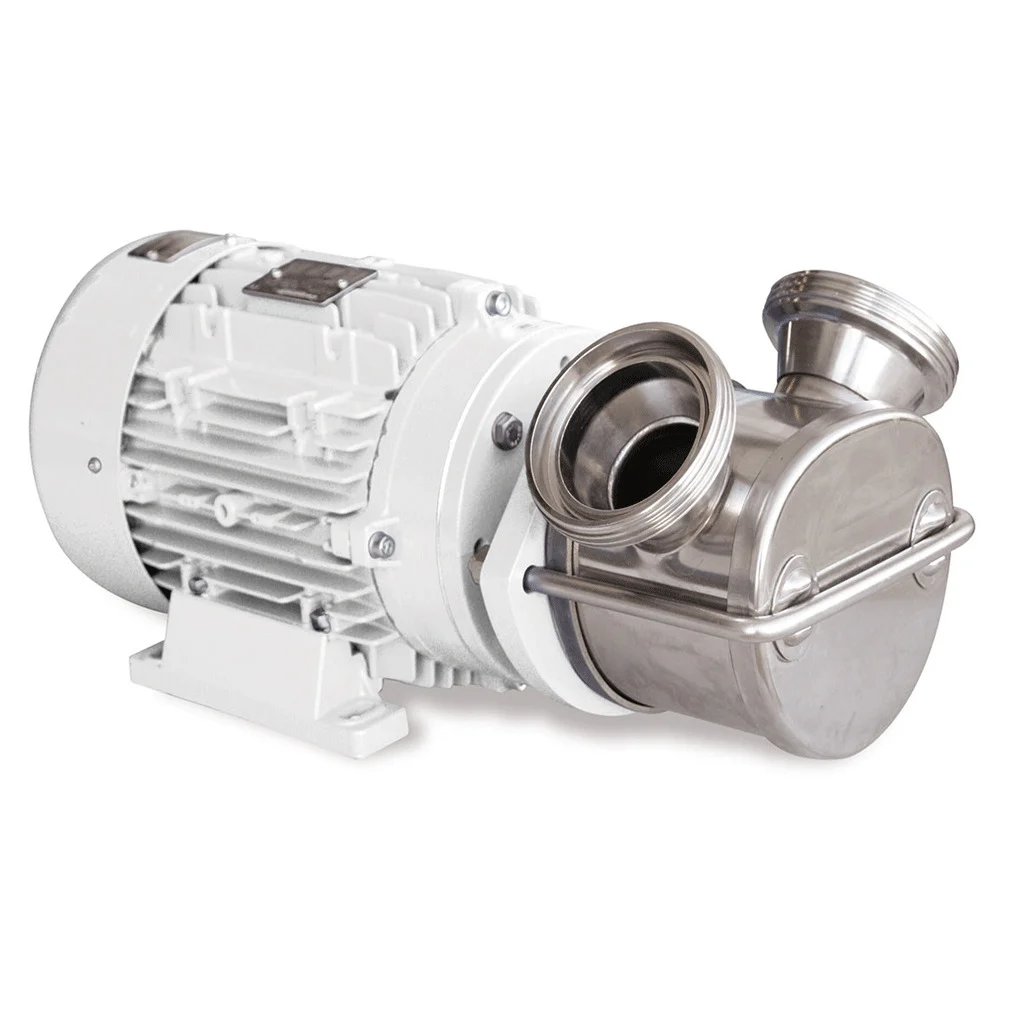 Flexible impellerWine, dairy and oilsAll industrial pumpsView the full range
We help you choose your centrifugal pump
Tell us what product you are moving, the flow rate, the head or pressure and the temperature, and we will recommend the right series, model and motor.