
Lobe pumps · FL55 to FL130 series
FL-PRL lobe pump
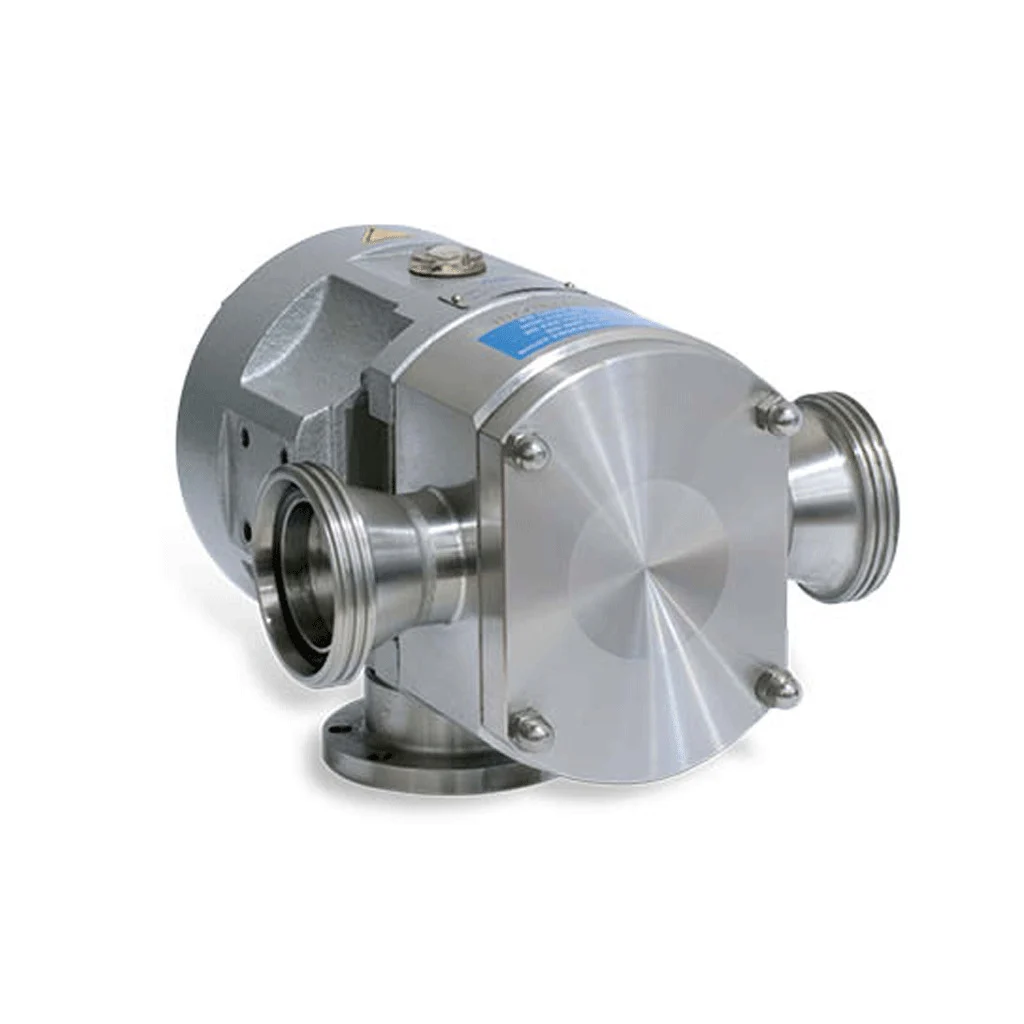
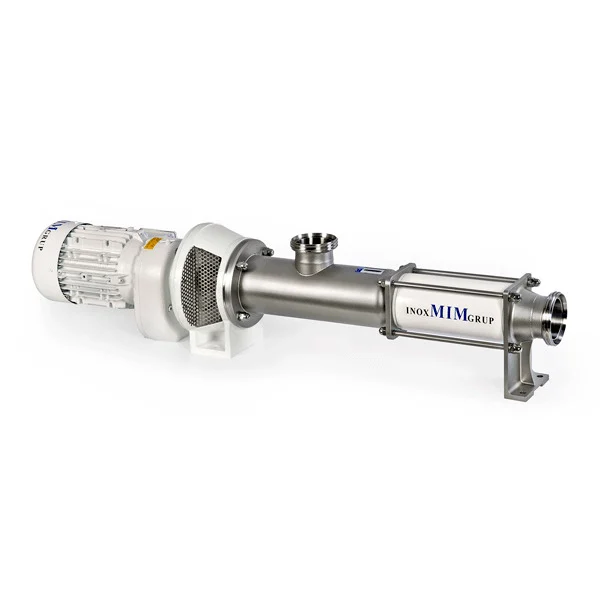
Rotary lobe pump in AISI 316 stainless steel for pumping viscous liquids in the food, dairy, cosmetics and biotechnology industries. Flow rates up to 70 m³/h, pressures up to 12 bar and viscosities up to 100,000 cP, in eight versions.
- 70 m³/hMaximum flow rate
- 12 barMaximum pressure
- 100,000 cPMaximum viscosity
- 90 / 165 °CStandard temperature / with special rotors
- AISI 316Wetted parts
- cSi/cSi/EPDMStandard mechanical seal
- Wetted parts in AISI 316
- EPDM gaskets
- DIN 11851 connections
- Up to 165 °C with special rotors
Prefer to speak to a technician? Call 972 58 20 40 or write to inoxmim@inoxmim.com
What is a lobe pump and what is it used for?
A lobe pump, or rotary lobe pump, is a positive displacement pump with two lobed rotors that rotate in opposite directions inside the body. The product enters the space between the lobes and the casing and is carried from the suction to the discharge. Each revolution moves a fixed volume, so the flow rate depends mainly on the speed, and the product moves gently: that is why it is the usual pump for viscous liquids and products with body.
InoxMIM's FL-PRL series has wetted parts in AISI 316 and EPDM gaskets. It reaches 70 m³/h, 12 bar and 100,000 cP, and works up to 90 °C as standard or up to 165 °C with special rotors. It is used with cream, curd and cheese, sugars and honeys, sauces, pulps and juices, musts and yeasts, cosmetics and culture broths.
This is the right pump if…
- You pump viscous products up to 100,000 cP: honey, glucose, condensed milk, creams or gels.
- You work with dairy products such as cream, curd or cheese.
- You need pressures up to 12 bar or flow rates up to 70 m³/h.
- The product is hot: up to 90 °C as standard and 165 °C with special rotors.
Choose other equipment if…
- It is a low-viscosity liquid such as water, milk or wine and you need flow: a centrifugal pump is better.
- You need to dose small flow rates of chocolate or fats: the FL-ENM gear pump, from 200 to 2,000 l/h, is better.
- You need more than 12 bar: the FL-ENC gear pump (14 bar) or a progressive cavity pump is better.
- You move harvested grapes at reception: the FL-ERTV progressive cavity pump is better.
Applications by industry
Products listed in the catalogue for FL-PRL lobe pumps:
Dairy industry
Cream, curd, cheese, concentrated milk and condensed milk.
Food and beverage
Liquid sugar, molasses, glucose, honey, concentrates, pulps, juices, syrups, sauces, musts and brewery mashes.
Cosmetics and detergents
Creams, gels, lotions, extracts and liquid detergents, as well as glues, resins and starch solutions.
Biotechnology
Nutrient solutions, enzymes, culture broths and cell suspensions.
Features and benefits
Viscous liquids
Viscosities up to 100,000 cP, from syrups and creams to pastes and glues.
Flow rate and pressure
Up to 70 m³/h and up to 12 bar, depending on the size and version.
High temperature
Up to 90 °C as standard and 165 °C with special rotors; optional heating jackets.
AISI 316 stainless steel
Wetted parts in AISI 316 and EPDM gaskets.
Silicon carbide seal
cSi/cSi/EPDM mechanical seal as standard; double or single cT/cT/V as an option.
Eight versions
Four sizes (FL55, FL75, FL100 and FL130), each in a higher-pressure version and a higher-displacement-per-revolution version.
Models in the series
The flow rate of a lobe pump depends on the speed: choose the size by the volume per revolution and the pressure you need.
| Model | Connection | Flow per revolution | Max. pressure |
|---|---|---|---|
| FL55SPRL | DN25 | 0.106 l/rev | 9 bar |
| FL55LPRL | DN40 | 0.152 l/rev | 6 bar |
| FL75SPRL | DN40/50 | 0.283 l/rev | 12 bar |
| FL75LPRL | DN50 | 0.389 l/rev | 8 bar |
| FL100SPRL | DN50/65 | 0.690 l/rev | 12 bar |
| FL100LPRL | DN80 | 1.070 l/rev | 8 bar |
| FL130SPRL | DN80 | 1.80 l/rev | 12 bar |
| FL130PRL | DN100 | 2.54 l/rev | 8 bar |
Data from the FLUIDMIM catalogue. Theoretical flow rate (l/h) = litres per revolution × rpm × 60. DIN 11851 connections as standard; full dimensions are in the technical data sheet.
Technical data
Materials
Wetted parts
AISI 316 stainless steel
Gaskets
EPDM
Hydraulics
Principle
Lobe, positive displacement
Maximum flow rate
70 m³/h
Maximum pressure
12 bar
Maximum viscosity
100,000 cP
Temperature
Standard
Up to 90 °C
With special rotors
Up to 165 °C
Mechanical seal
Standard
cSi/cSi/EPDM
Optional
Double or single cT/cT/V, thermosiphon cooling
Drive and connections
Drive
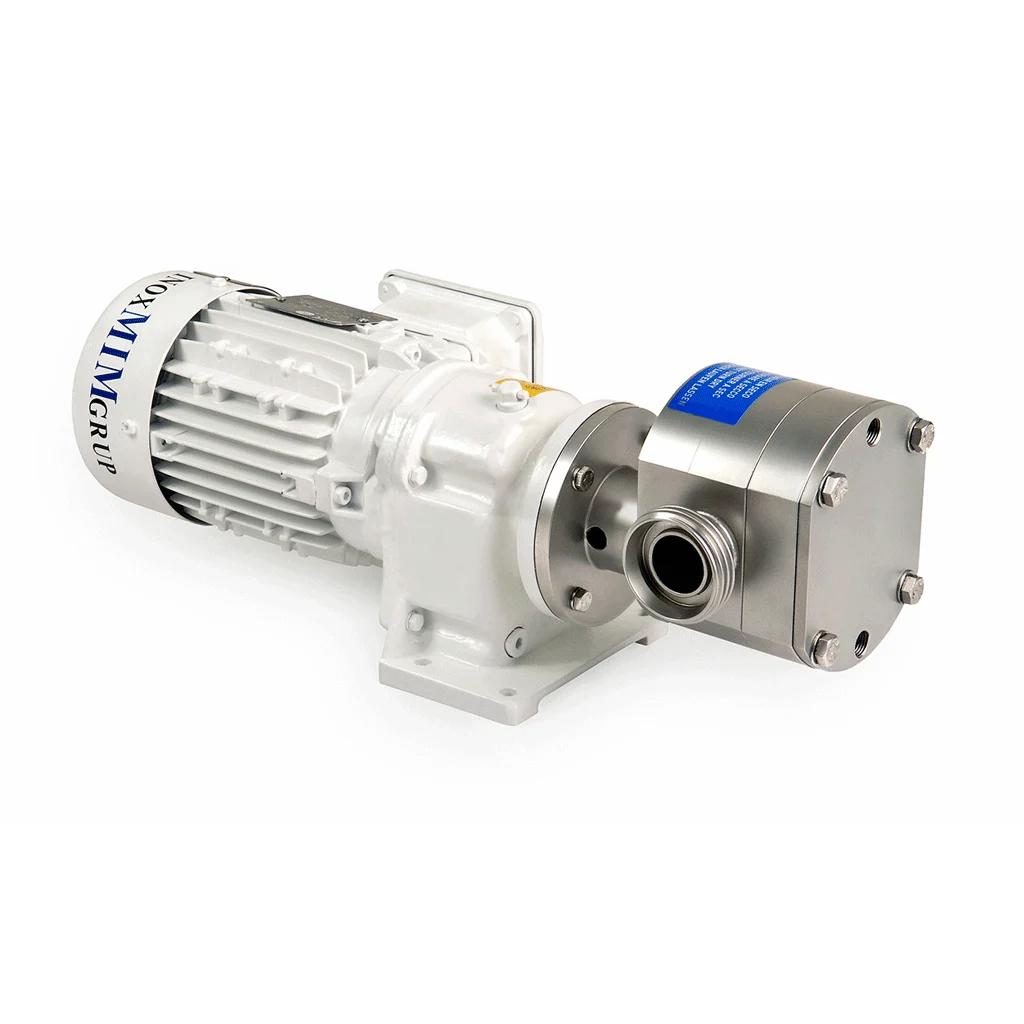
Geared motor, variable-speed drive or frequency inverter (optional)
Standard connections
DIN 11851
Other connections
Clamp, flange, SMS, etc.
Options and customisation
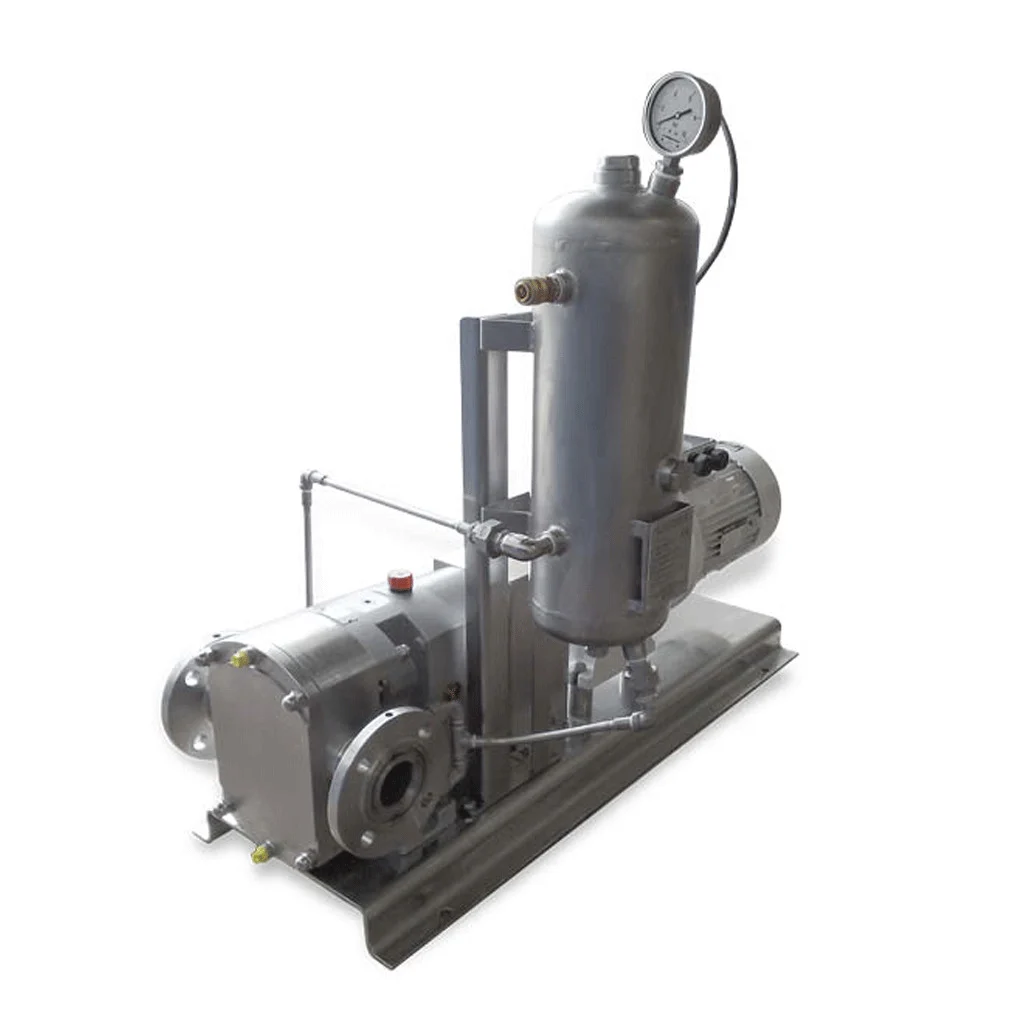
Safety by-pass
Protects the pump and the installation if the discharge is closed.
Mechanical seal
Double or single cT/cT/V, and seal cooling by thermosiphon.
Heating jackets
To keep the product hot inside the pump.
Drive
Geared motor, variable-speed drive or frequency inverter to adjust the flow rate.
Feed hopper
For very dense products that do not flow to the suction on their own.
Connections and mounting
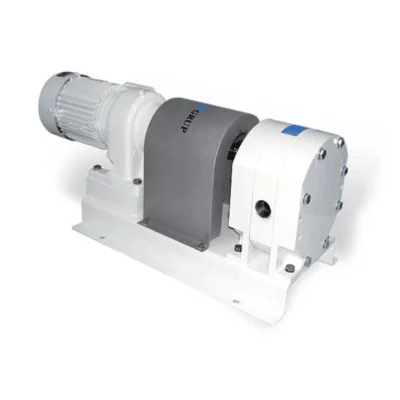
Clamp, flange or SMS, among others; mounting on a baseplate or trolley.
Other positive displacement pumps
Frequently asked questions about the FL-PRL lobe pump
How does a lobe pump work?
With two lobed rotors that rotate in opposite directions inside the body. The product is trapped between the lobes and the casing and carried from the suction to the discharge. Each revolution moves a fixed volume, so the flow rate depends on the rotational speed.
What viscosity can it pump?
Up to 100,000 cP. That is why it is used with products such as honey, glucose, condensed milk, mayonnaise, cosmetic creams, glues or resins.
Which model do I need?
It depends on the flow rate and the pressure. Each size has a higher-pressure version and a higher-volume-per-revolution version: for example, the FL75SPRL moves 0.283 l per revolution at 12 bar and the FL75LPRL, 0.389 l at 8 bar. Tell us the flow rate, pressure and viscosity and we will propose the size and speed.
What temperature can it withstand?
Up to 90 °C with the standard rotors and up to 165 °C with special rotors. For products that must be kept hot there are heating jackets, and the mechanical seal can be cooled by thermosiphon.
What is the safety by-pass for?
To protect the pump and the piping. In a positive displacement pump, if the discharge is closed the pressure rises without limit; the by-pass returns the product to the suction when the set pressure is reached.
Can it run dry?
It is not advisable. The mechanical seal needs the product for lubrication and cooling; when run dry it heats up and is damaged. If the suction may run out of product, a system that stops the pump is advisable.
Request a quote for the FL-PRL lobe pump
Equipment: FL-PRL lobe pump
Tell us what product you are pumping, the flow rate, the pressure, the viscosity and the temperature, and whether it contains pieces or solids. With these data we will indicate the size, the version and the drive.