
Our progressive cavity pump catalog
InoxMIM’s progressive cavity pumps represent one of the most effective solutions for pumping viscous, pasty products or products with solids in suspension, maintaining the homogeneity of the fluid and a constant flow rate, even in the face of pressure variations.
Its operating principle, based on a helical rotor that rotates inside an elastic stator, allows the product to be moved gently and without pulsations, guaranteeing the integrity of its physical and chemical structure.
Manufactured under the FluidMIM line, InoxMIM helical pumps combine mechanical robustness, hygienic design and high volumetric precision, which makes them essential in sectors such as food, oenology, cosmetics, chemical and pharmaceutical.
Progressive cavity pumps
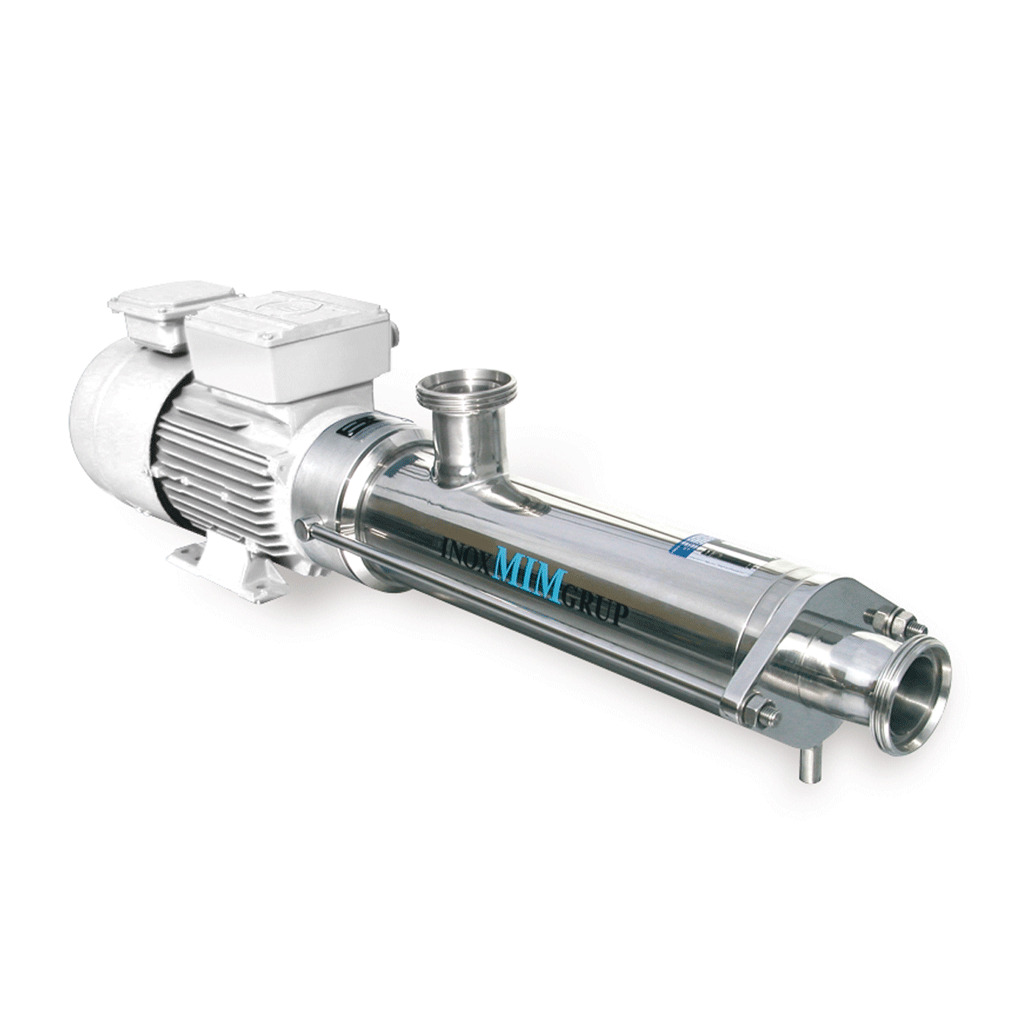
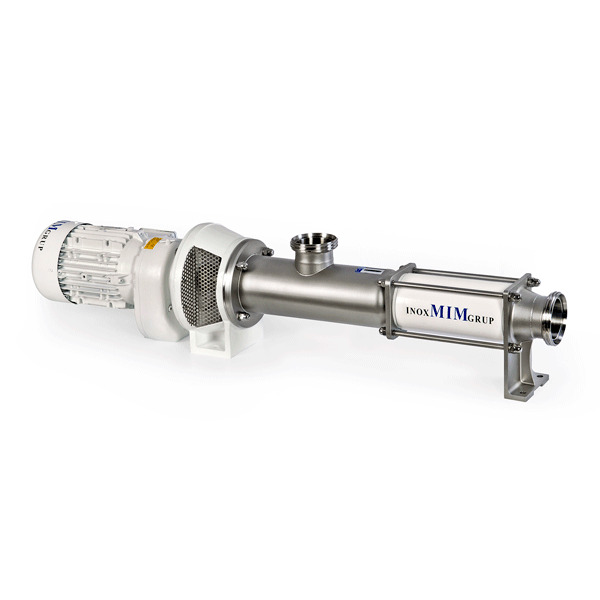
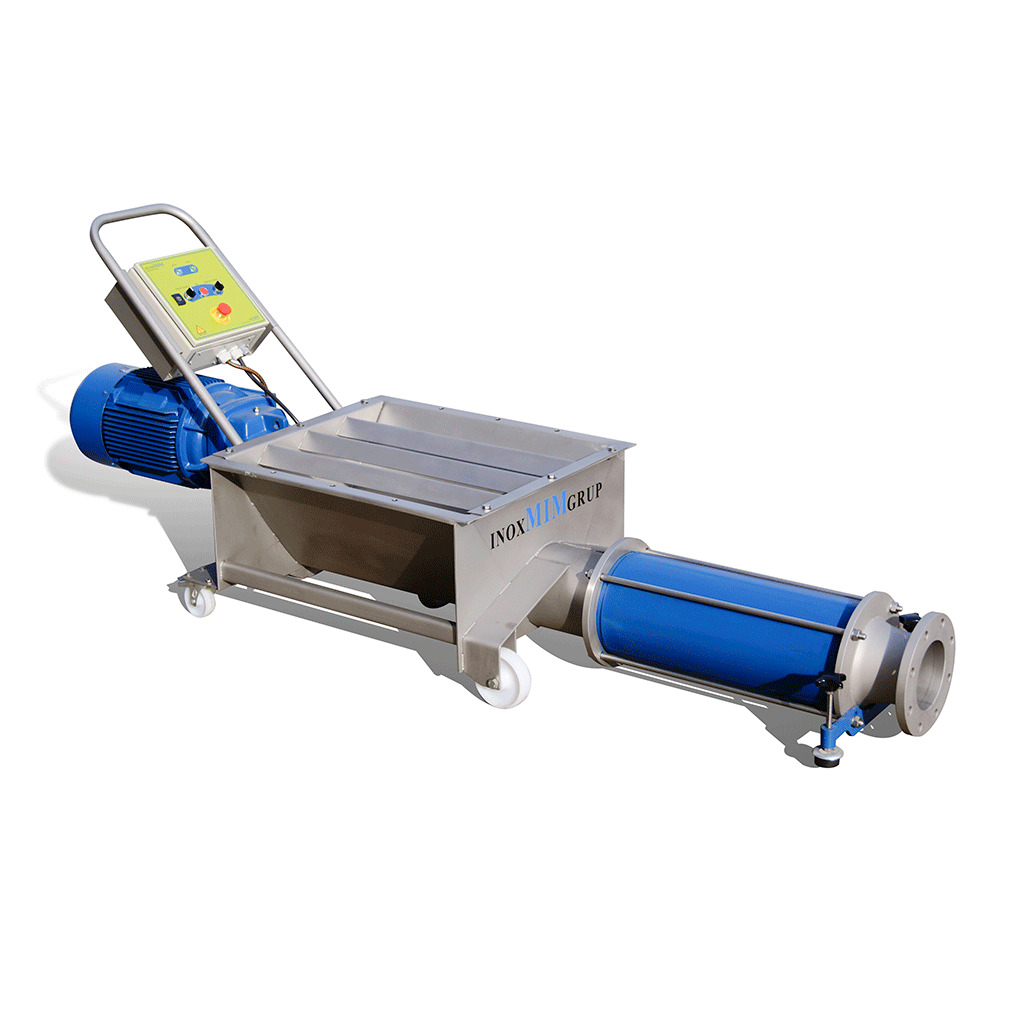
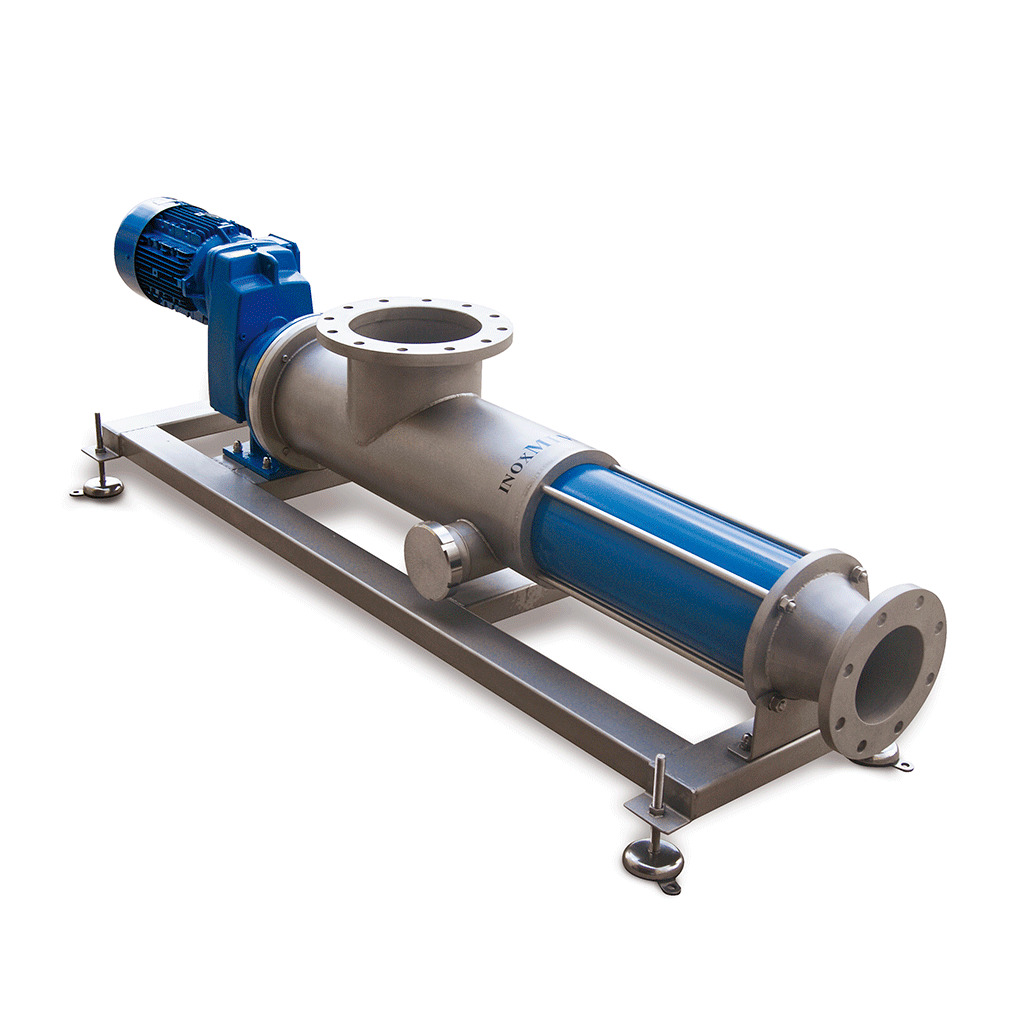
InoxMIM centrifugal pump models
Operational and design advantages
Most common industrial applications
Food industry
In the food sector, progressive cavity helical pumps are used for the transfer of pastes, purees, concentrates and products with solids in suspension, where it is essential to preserve the texture and organoleptic properties.
The controlled displacement of the fluid prevents phase separation, air incorporation and thermal degradation during the process.
They are common in fruit, vegetable and meat product processing lines, as well as in confectionery, soup and prepared sauce factories.
They are also used in specific applications such as:
- Dosing of food fillings towards packaging systems.
- Feeding heat exchangers or pasteurizers, where uniform flow and stable pressure are required.
- Transfer of dense masses or with fibers, such as nut creams, concentrated tomato or industrial mashed potatoes.
Their compatibility with certified materials and their ease of cleaning using CIP/SIP systems make them suitable for environments with high hygienic requirements.

Wine industry
The FL–ERTV and FL–EREX pumps have been specifically designed for wineries and oenological plants, where gentle and constant pumping of the must or whole/destemmed grapes is required.
The rotor–stator system guarantees a transfer without grain breakage or air incorporation, avoiding oxidation phenomena that may alter the final quality of the wine.
These pumps are usually integrated into processes of:
- Harvest reception and transport of grapes to presses or destemmers.
- Transfer of must or fermenting wine between tanks or buffer tanks.
- Recirculation and feeding of filters or controlled pumping systems, where flow stability is critical for product homogenization.
Thanks to their hygienic design and the possibility of working with hoppers and feeding augers, progressive cavity pumps are a key tool in the automation of modern wineries.
Cosmetic and pharmaceutical industry
In these sectors, precision and product integrity are essential.
InoxMIM progressive cavity pumps allow the transfer of emulsions, creams, gels and viscous suspensions without affecting their structure or generating aeration.
Its uniform flow prevents the formation of bubbles, maintaining the homogeneity and density of the product even at low rotation speeds.
They are commonly used in:
- Feeding reactors, mixers or vacuum tanks for the manufacture of creams and lotions.
- Dosing of finished products towards automatic packaging or filling systems.
- Recirculation and thermal control processes, guaranteeing a constant and controlled flow during the heating or cooling phases.
Its sanitary construction in AISI 316L and the stators in neutral materials (NBR, EPDM or PTFE) ensure maximum compatibility with pharmaceutical and cosmetic formulations, complying with GMP, FDA and EHEDG regulations.
Chemical industry
In the chemical industry, progressive cavity pumps stand out for their abrasion resistance, volumetric stability and ability to work with non-homogeneous or high-density products.
They can pump slurries, muds, resins, silicones, pigments or concentrated detergents, even when they have solid components or thixotropic behavior.
Its modular design allows you to select rotor, stator and mechanical seals depending on the chemical aggressiveness or temperature of the fluid, guaranteeing a long service life and simple maintenance.
They are especially useful in:
- Wastewater and industrial effluent treatment plants.
- Processes for feeding reactors or mixing systems where controlled flow is required.
- Transfer of abrasive or pasty products with tolerance to variations in pressure and viscosity.
In combination with frequency control systems or PLC, they offer precise flow regulation and allow the pump to be integrated into advanced industrial automation processes.