
Food industry
Machinery for the cheese industry: milk production and pasteurisation
 By Albert Moreno, Sales Director at InoxMIM
- Published on
- Updated on
- 5 min read

Why is the pasteurisation of dairy products so important?
As industrial machinery manufacturers specialising in cheese making equipment, we wanted to publish this post on milk pasteurisation. In this process, milk is subjected to a temperature of between 70 and 95 °C for a few seconds to eliminate certain pathogens that could cause health problems for consumers. Depending on what needs to be processed, the temperature, the mechanics or the time vary considerably.
Milk pasteurisation: powdered milk, cream or milk for cheese making

For cream, the pasteurisation process must be carried out at 95 °C for 20 seconds and, after this time, the cream must undergo rapid cooling to 65 °C.
To skim milk properly, it must be held at 95 °C for 15 or 20 seconds and the result then cooled to 21 °C.
Under these conditions, the cream is exposed to a high temperature in order to eliminate lipases, which are responsible for the product being left with a rancid aftertaste.
For the pasteurisation of powdered milk, the treatment temperature and time vary considerably:
If we want to pasteurise skimmed milk, it must be heated to 88 °C for 3 minutes. Milk with a higher fat content should be heated a little more, up to 90 °C, also for 3 minutes.
This guarantees the elimination of lipases and a significant reduction in the bacterial flora of the milk.


In the case of cheese, the milk pasteurisation process also changes slightly. There are two different types of treatment depending on what is sought: a fast treatment in which the temperature of the milk is raised to 70 °C for 15 or 20 seconds, or a slow one in which the temperature is lowered to 65 °C for 30 minutes.
If the milk is subjected to higher temperatures, the calcium precipitates and turns into tricalcium phosphate. This will in all likelihood cause faulty coagulation that will directly affect cheese production.
Machinery for the cheese industry: CIP cleaning equipment
We would also like to highlight that we have a wide catalogue of CIP cleaning equipment. In the food industry, the hygiene and disinfection of all machinery, as well as of the surfaces involved in the processes, is essential. Poor cleaning can ruin an entire day's production and affect the quality of the final result.
Hygiene processes in the food industry with CIP cleaning equipment (Clean in Place), are based on four very clear variables: the mechanical factor, time, temperature and detergent.

When all of them are in balance, effective cleaning is achieved for all the equipment, tools and surfaces used in industrial production. As a result, they have become essential equipment in modern cheese industry machinery.
Machinery for the cheese industry: contact InoxMIM to resolve any queries
At InoxMIM, as experts in food industry machinery, we are here to help you and resolve any queries you may have about milk pasteurisation.
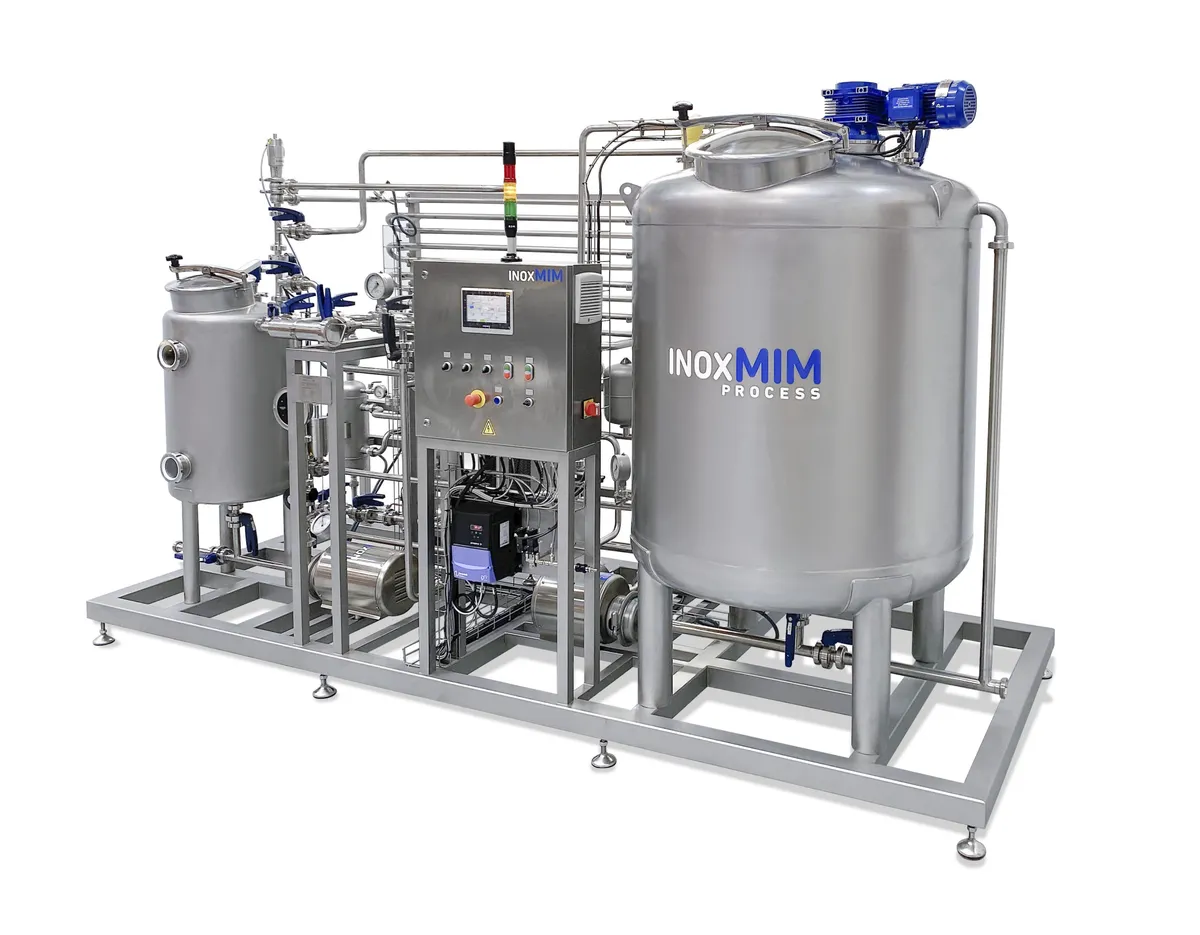
One of the specialities we would like to emphasise is the manufacture and design of special machinery for the industrial production of pasteurised foods using HTST-HIGH Temperature Short Time.
We can also design fully automated process installations for the dairy sector and its derivatives, such as yoghurts, creams, cheeses, milkshakes or desserts. If you would like us to study your needs and optimise your industrial production line… Do not hesitate to call us!
Other InoxMIM machinery: sauce production in the food industry

Equipment for making sauces, purées, mayonnaise and more
We have also spent many years designing and developing specific equipment for the industrial production of sauces, soups or purées.
Advanced, high-performance technology solutions with equipment that combines cooking, homogenisation and the desired texture, according to the demands of society or the market, always handling the product with the utmost care and offering an excellent level of productivity in record time.
For the industrial production of juices and beverages, we also have state-of-the-art machinery capable of keeping the natural and nutritional qualities of the foods to be mixed intact.
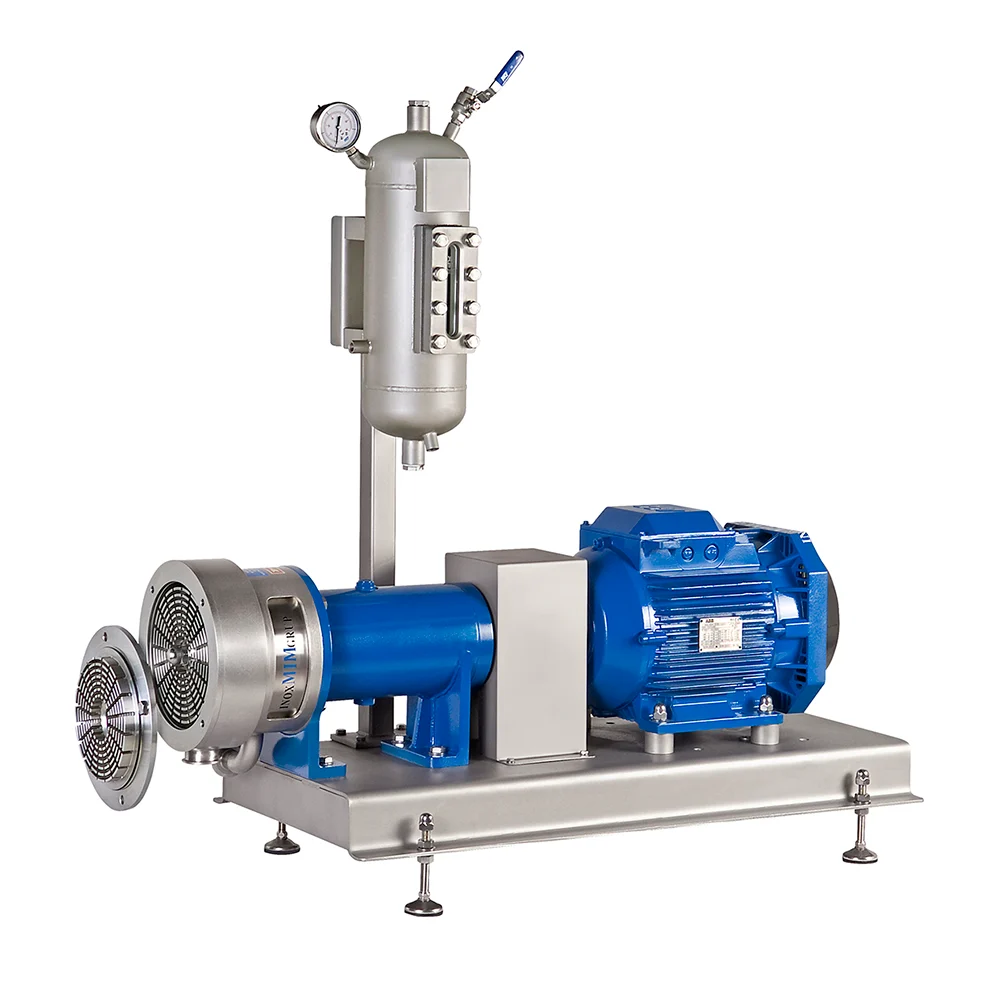
For example, we would recommend that you take a look at our EML and MICRO emulsifiers, designed to keep production costs as low as possible; they produce a homogeneous product, without lumps, and prevent oxidation. These units are also useful for transferring and handling products that have already been homogenised.

EML inline high-shear mixer

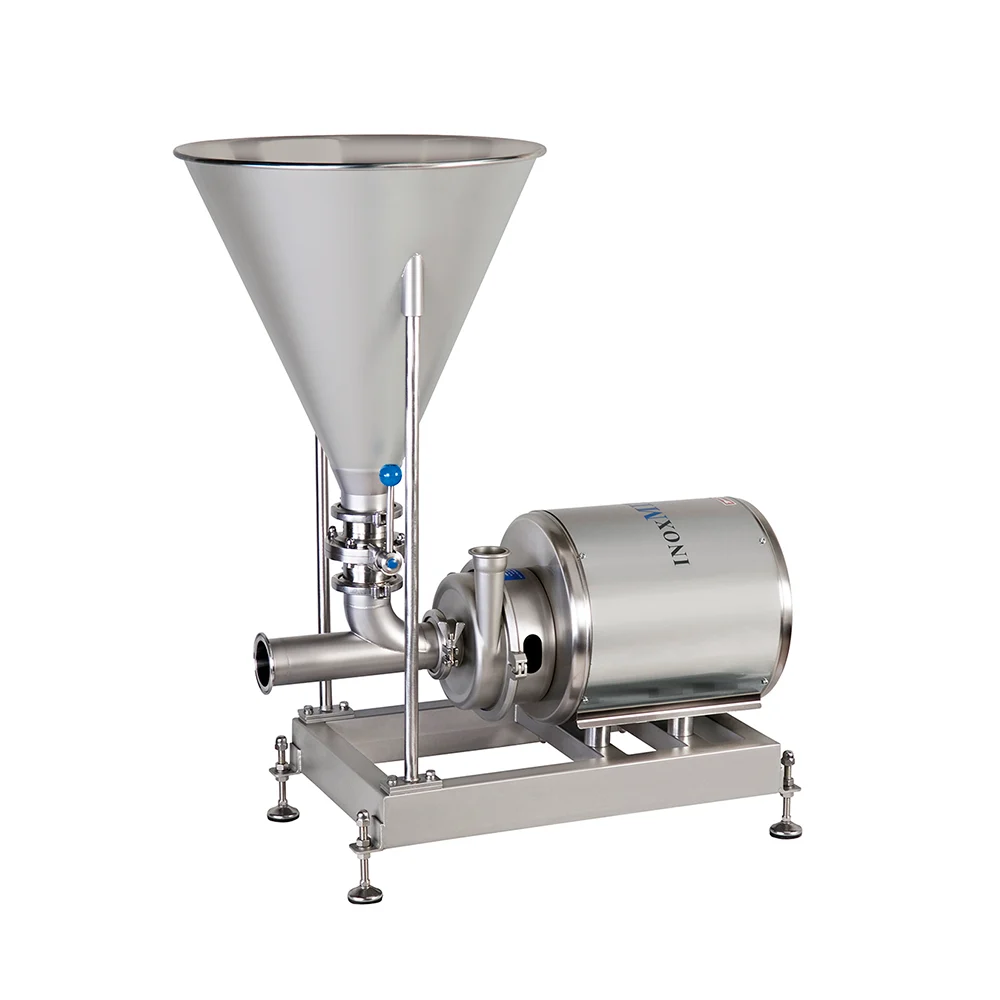
Nor can we forget to mention our range of industrial blenders, agitation and mixing equipment that is very common in the food industry, with advanced performance and specially designed to meet a long list of applications: dissolving sugar in food products, preparing powdered milk, brines, syrups, incorporating additives, colourings…
To receive detailed information about any of our equipment, simply fill in the contact form on this website, email us at inoxmim@inoxmim.com or call us on (+34) 972 58 20 40.
Since its beginnings in 1997, INOXMIM has been closely linked to the development and manufacture of industrial machinery. The pumping, agitation, mixing and fluid-handling systems we manufacture have allowed us to meet our customers' needs over the years.
Constant innovation and development enable INOXMIM to provide complete solutions for most processes, thereby meeting the most demanding requirements in industry.
We are professionals with a long track record and the experience to back it up.
About the author
Sales Director at InoxMIM
Sales Director at InoxMIM, a manufacturer of stainless steel pumps, agitators and process equipment since 1997. He supports customers in choosing each piece of equipment, from the first technical enquiry through to the quote.


Do you have a similar process?
Tell us which product you are working with and what you need. Our technical team will recommend the right equipment.